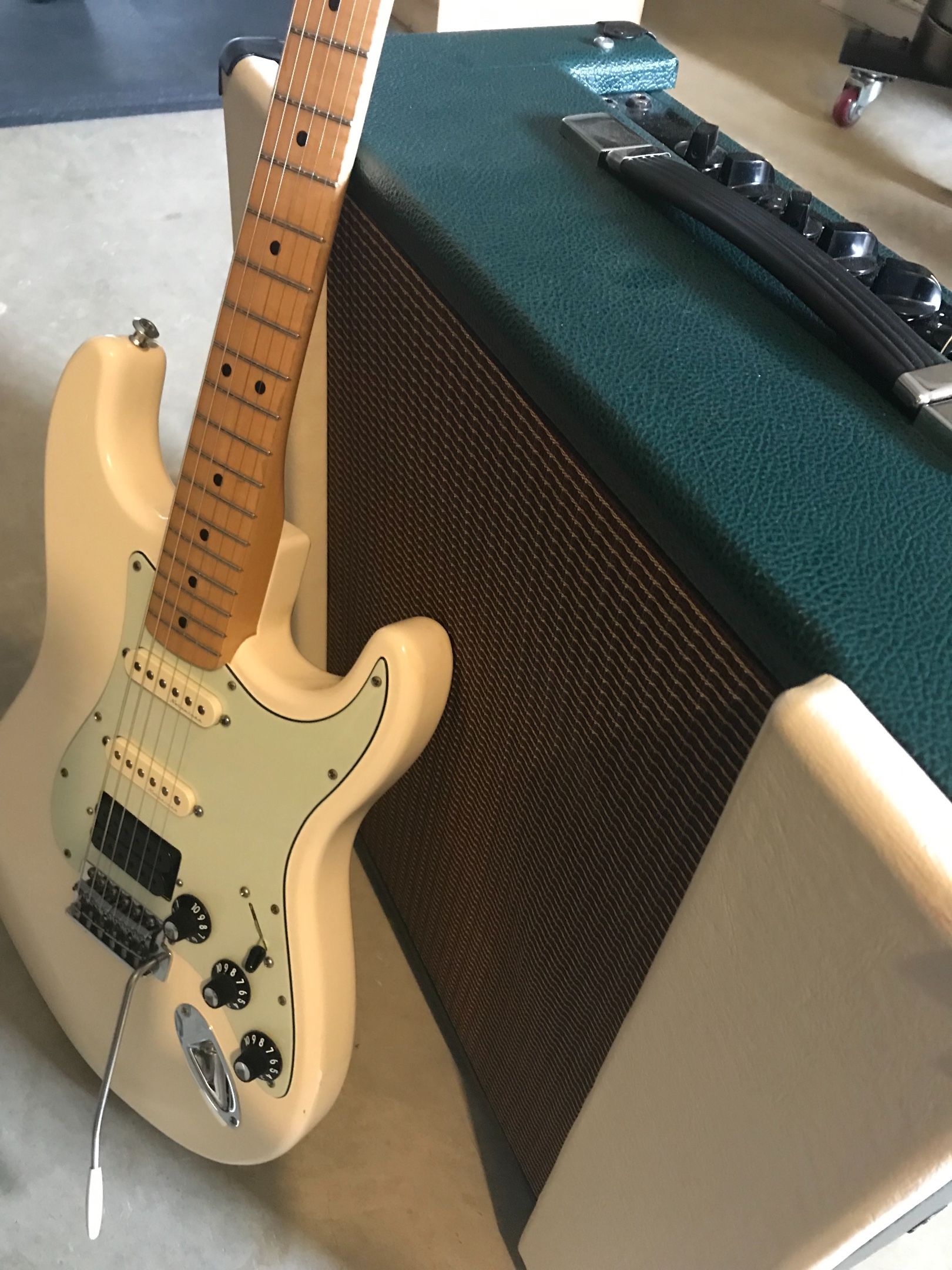
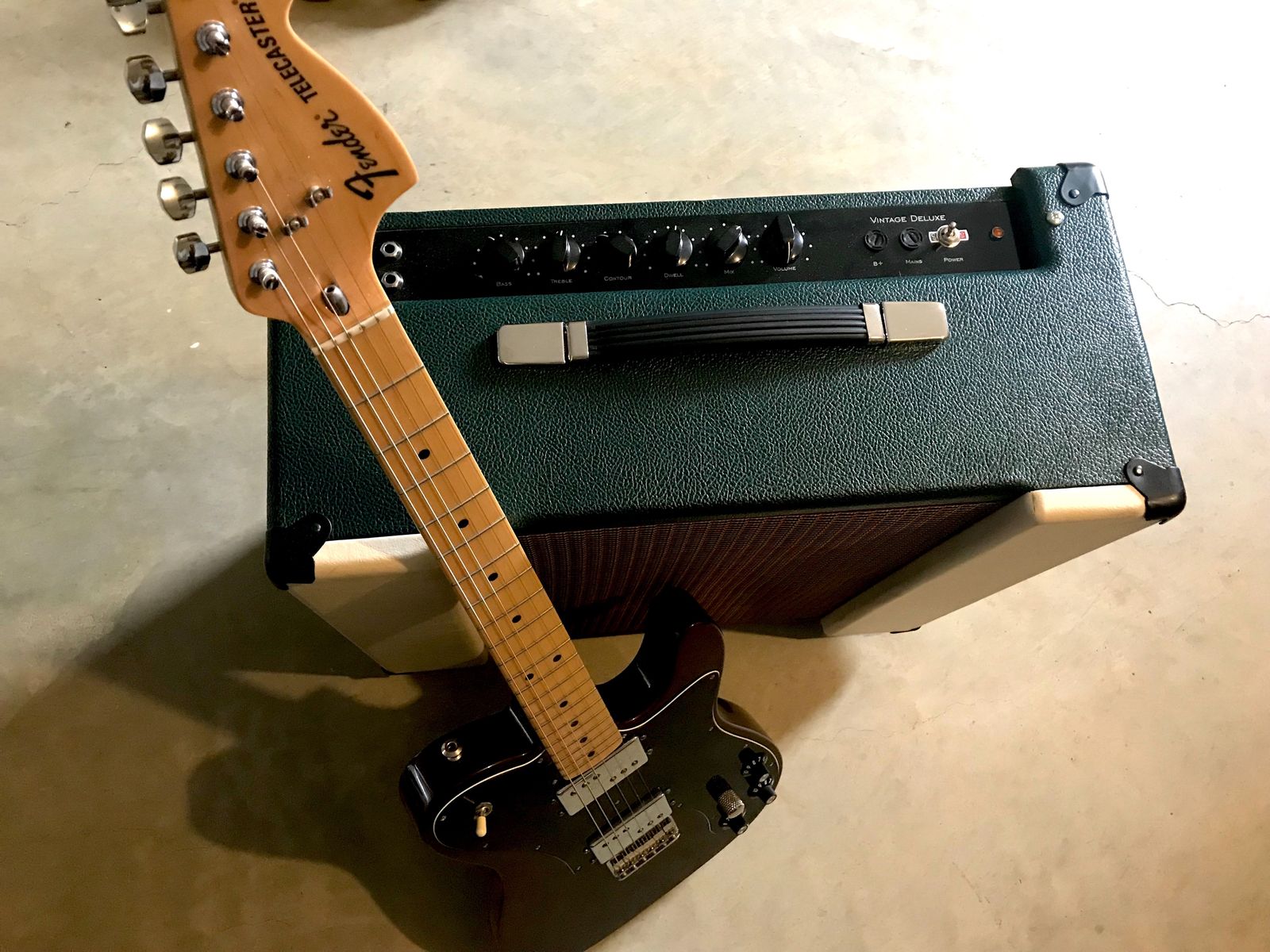
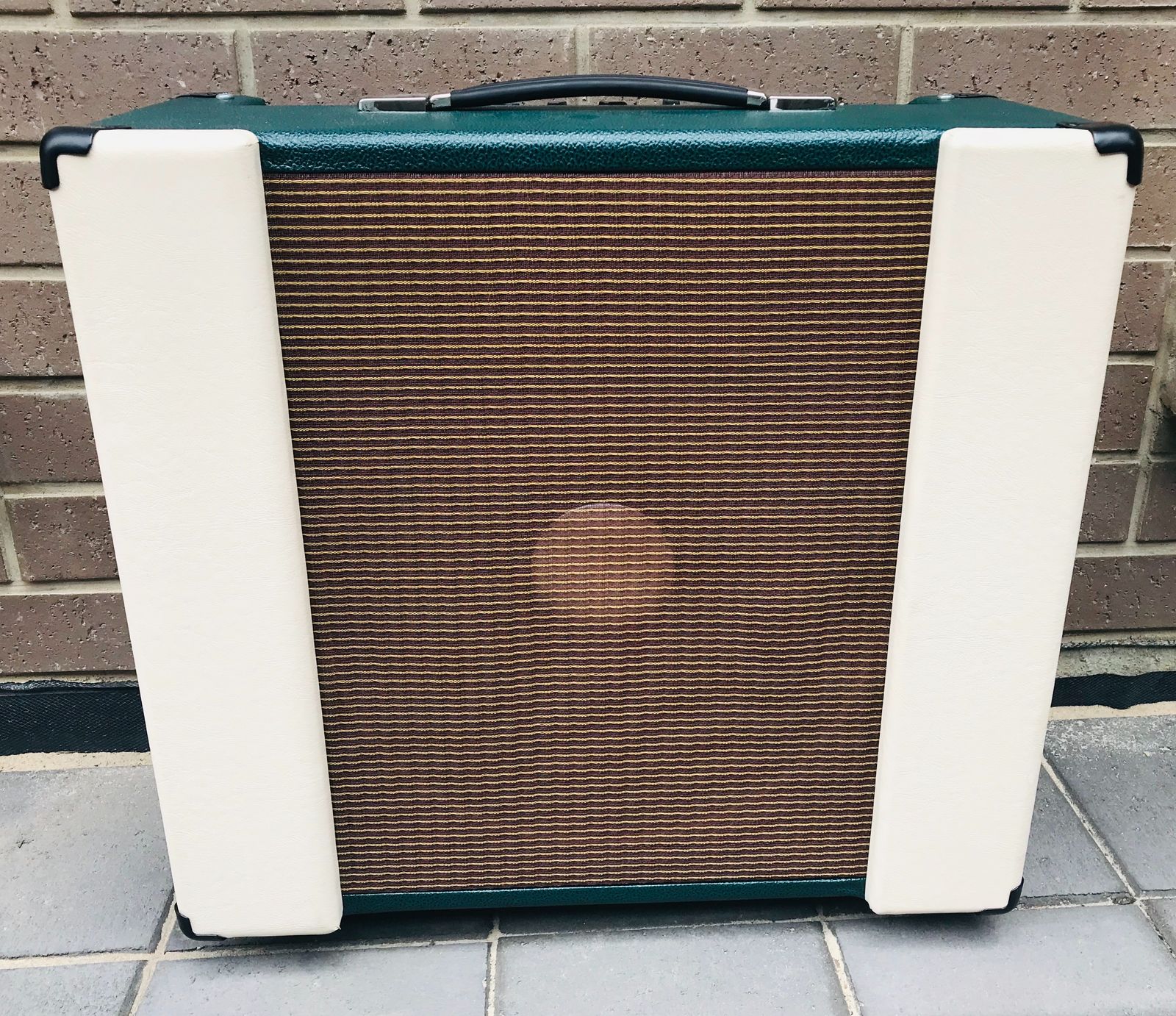
The Four Way Switch guitar amplifier gives you four great tones with the turn of a switch:
Tone 1– dark-side jazz with a big bottom end and rolled-off tops, ideal for hollow-body guitars.
Tone 2 – classic blackface scoop for blues, country and rock.
Tone 3 – flat EQ for acoustic guitar.
Tone 4– treble boost.
Two amp models with different gain structures and pre-amp arrangements:
The Vintage Deluxe – super clean and warm, ideal for country and jazz and all clean players – you have pedals? Stick them in front of the amp.
The Sweet Spot – a dirtier amp, lots of growl and grit, with third gain-stage overdrive – find your sweet spot and the amp will deliver exactly what you want.
Both platforms have the Four Way Switch.
Reverb and tremolo available as options.
Choice of power, choice of speakers (Weber or Celestion), combos or heads, you choose.
My good friend Bill Palmer has been kind enough to put together the following showcase files for both amp types
Neale Amplification Custom Baxandall Tone Stack
Introduction
Having recently moved back to Adelaide (mid 2018), I’ve reconnected with a lot of old friends and fellow musicians. One such person is Andrew Neale. Andrew is a valve amplifier builder and repairer who I’ve known for over 10 years. We first met when I was looking for someone to service a Marshall JTM45 and we’ve kept in touch over the years.
Recently, Andrew presented me with an amplifier to sample. The amp features a custom Baxandall tone stack Andrew has developed. I’m not an amp technician so I can’t tell you exactly how this works except to say, it’s amazingly simple and sounds fantastic.
Tone Stack Info…
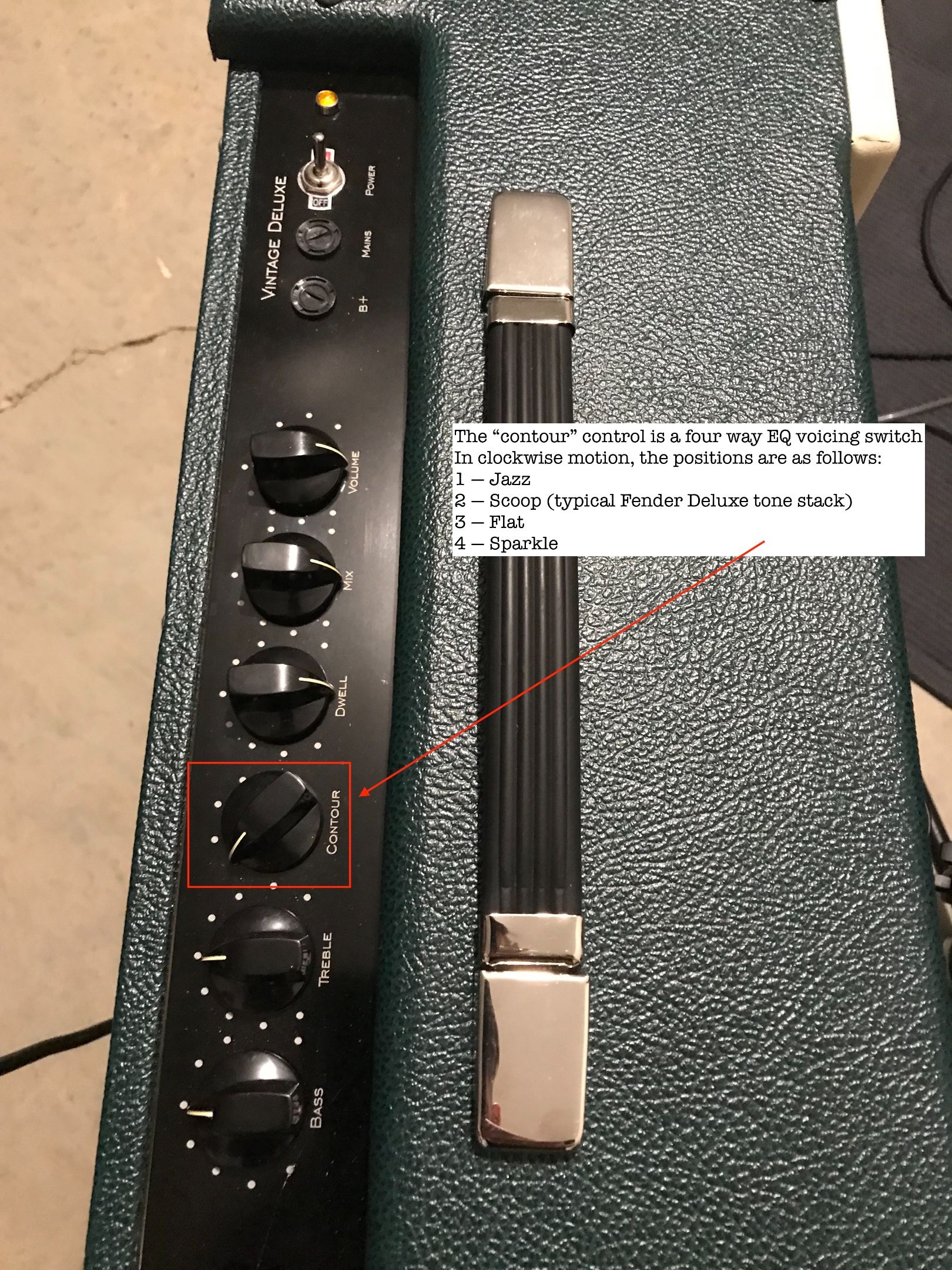
The tone stack Andrew has developed is housed and accessed from a four way variable rotary switch. In addition to standard master bass and treble controls, the rotary switch reconfigures the voicing of the amplifier into four distinct modes, as follows:
1. Jazz 2. Scoop 3. Flat 4. Sparkle
I should point out that this is not a channel switching amplifier. Rather, it’s an elegant single channel design that in conjunction with the four way rotary switch, offers incredible tonal versatility.
Other features of the prototype amp include the following:
Hand-wired all valve preamp and power amp
40 watt 6L6GT power amp, cathode bias, valve rectified (GZ34)
Master bass and treble EQ controls
Master volume control
Hi and lo inputs
Dwell and mix controls for valve powered reverb circuit
Hand-built solid pine cabinet with dove-tail joints
Cabinet design features two front panels that act as a convenient guitar stand
Present configuration is loaded with a re-coned 15” JBL speaker
Future build would use the Weber 15” California speaker
The prototype amplifier from Neale Amplification uses a custom four way rotary switch that reconfigures the voicing of the amplifier, depending on where it is set…
Recording Setup Notes
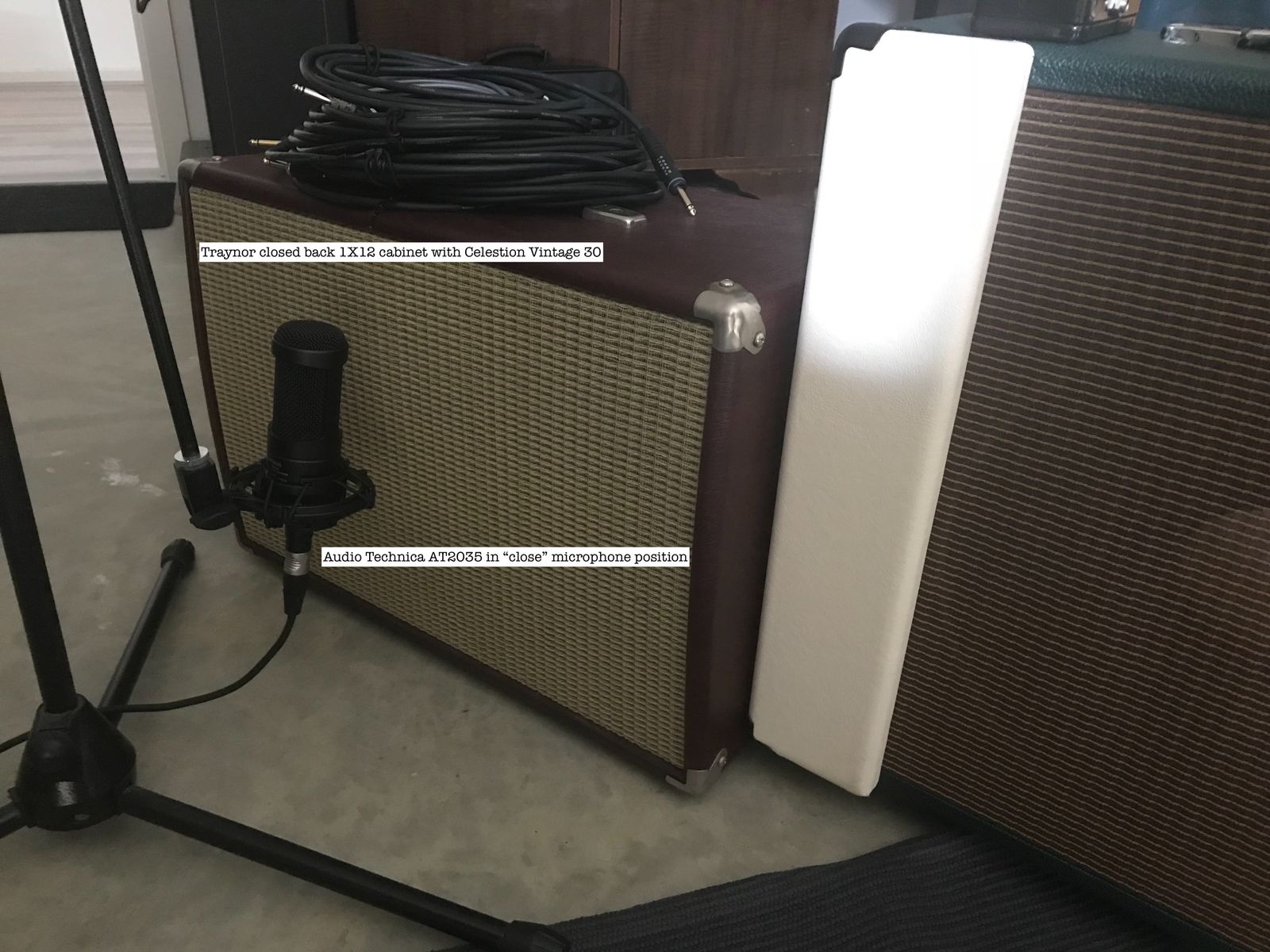
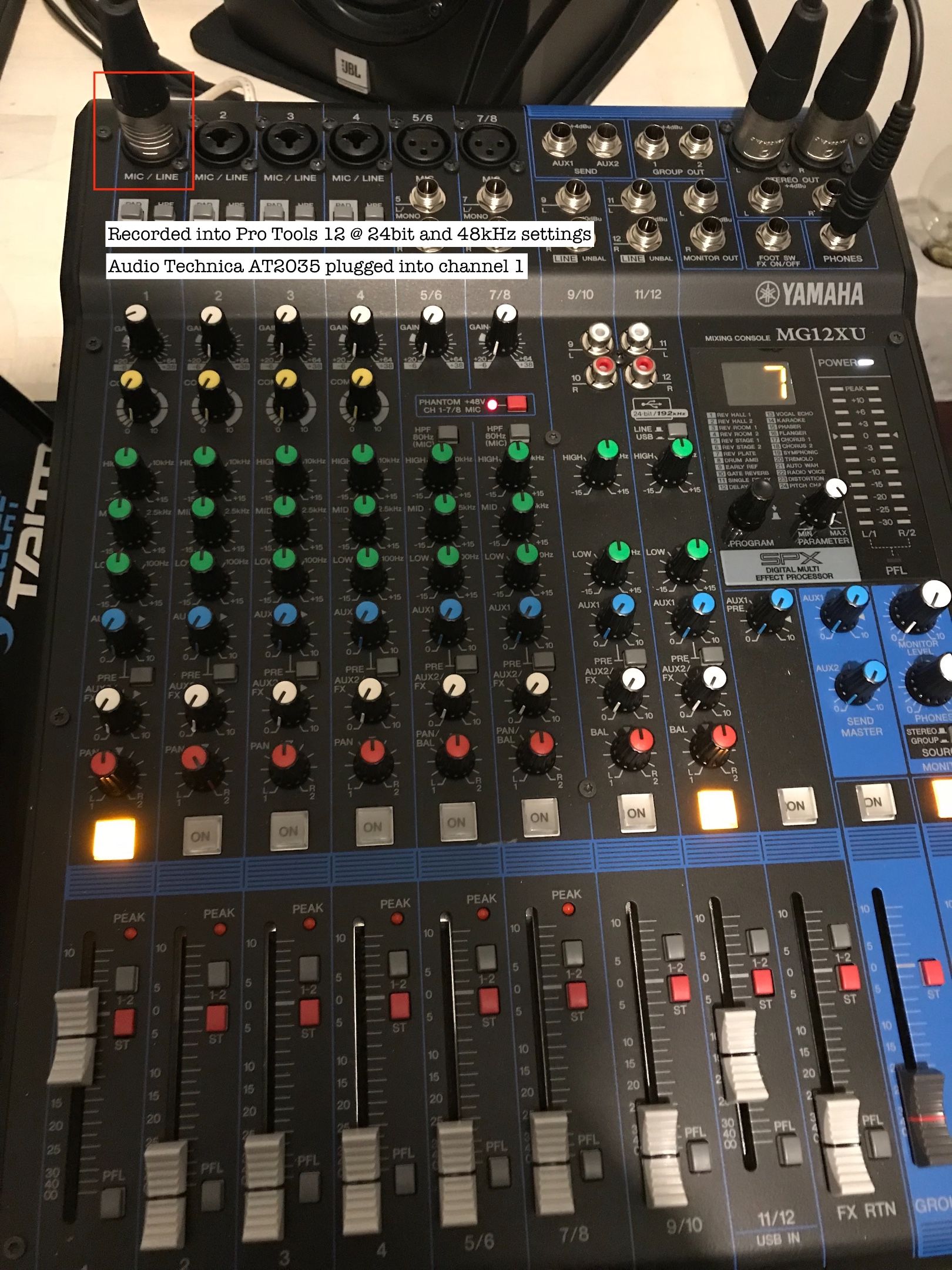
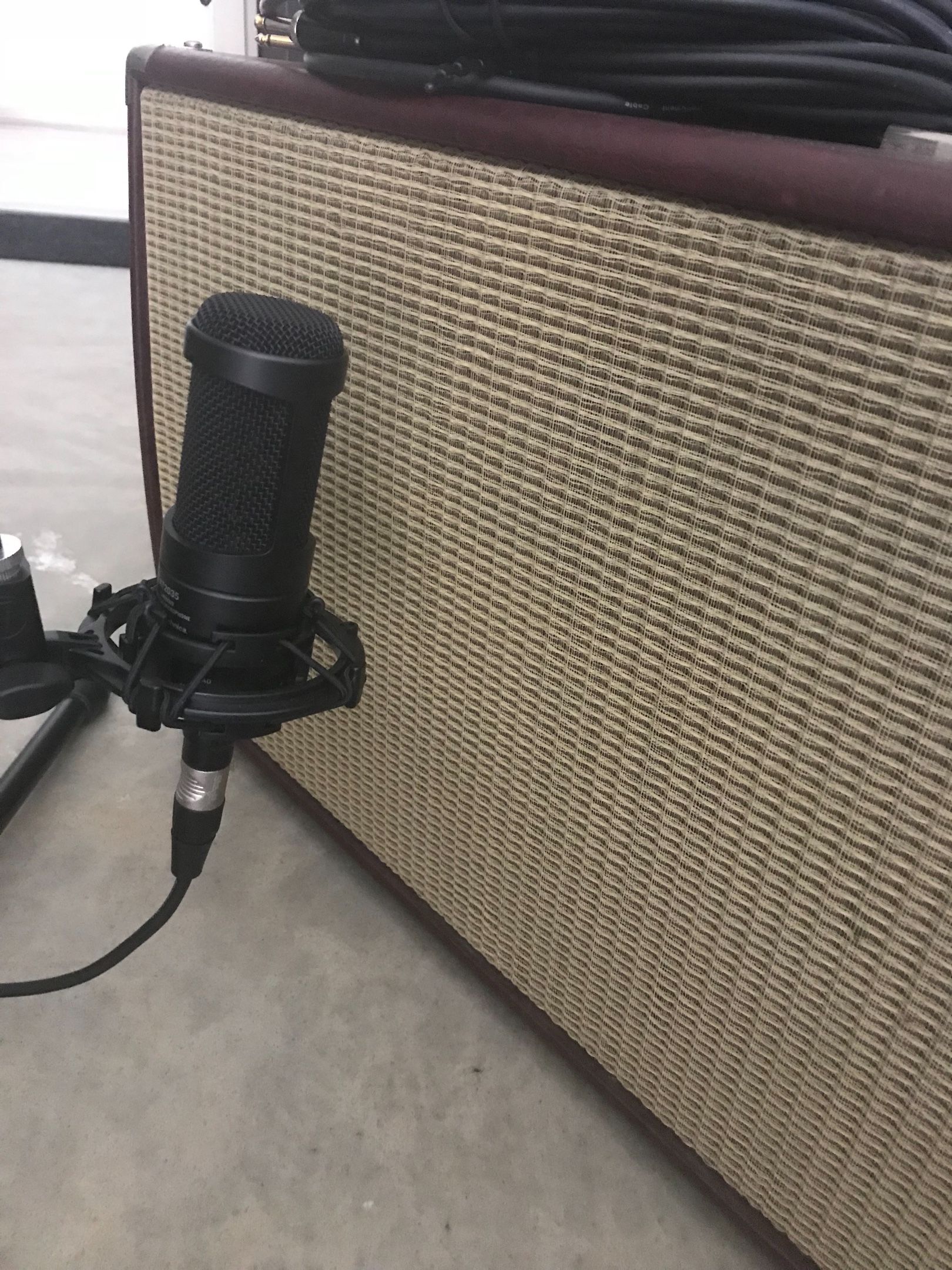
The prototype Neale amplifier features a re-coned 15″ JBL (a great speaker BTW) however, this is not nearly as common as other makes and models of guitar speakers. To keep the samples more accessible and in keeping with “what most guitar players know,” I unplugged this and ran the amp into a closed back Traynor 1X12 with a Celestion Vintage 30. The cabinet was close miked with an Audio Technica AT2035 large diaphragm condenser microphone. From here, the signal runs into a Yamaha MG12XU mixing desk and audio interface. I recorded on my Apple iMac using AVID Pro Tools 12 (2018.7) with 24 bit and 48kHz settings.
The amplifier had the reverb turned to zero and the master bass and treble controls were set in the middle, i.e. twelve o’clock. I used the “hi” input. These settings were identical for all recorded samples. The volume wasn’t cranked either — it was simply loud enough to record with in the same room.
Lastly, each respective demo uses only one guitar. I do not use time or pitch correction when recording and this was no exception. There is no editing on the guitar parts, i.e. each track is a single take. If I made a mistake (which I did occasionally) I simply deleted the take and went again from the start of the piece.
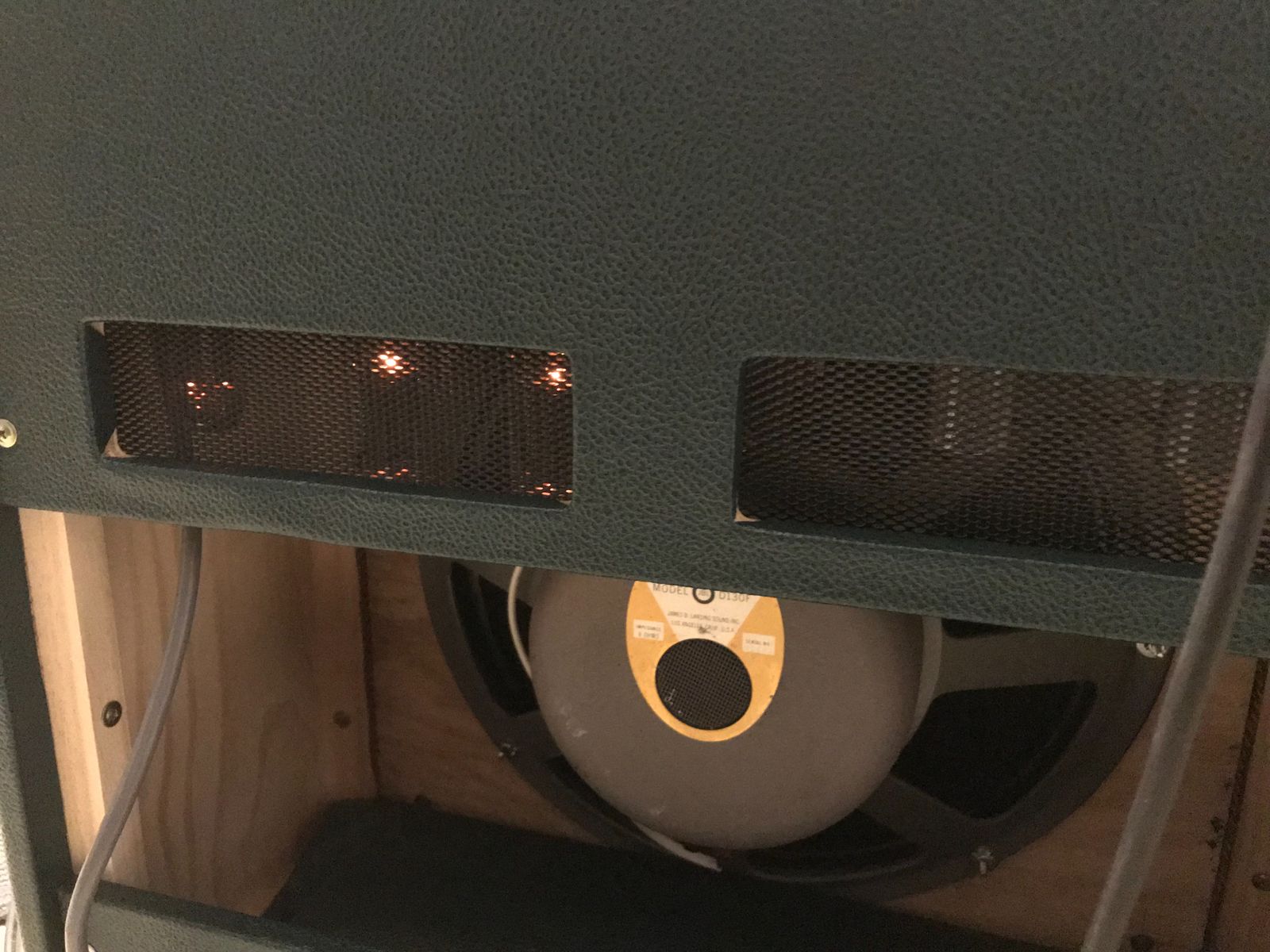
The prototype Neale amplifier features a hand-built solid pine cabinet and is loaded with a 15” JBL speaker. And look at those valves! All that glowing vintage goodness…
The Traynor 1X12 Vintage 30 loaded cabinet is nested beside the Neale prototype…
The Yamaha MG12XU has the excellent D-PRE preamps that utilise an inverted Darlington circuit. There was no EQ boosts or cuts on the signal path, nor any compression or FX…
Another view of the AT2035 large diaphragm condenser microphone. The mic position was not changed or altered for each sound sample — set and forget baby
Sample #1 – Jazz, Scoop and Sparkle
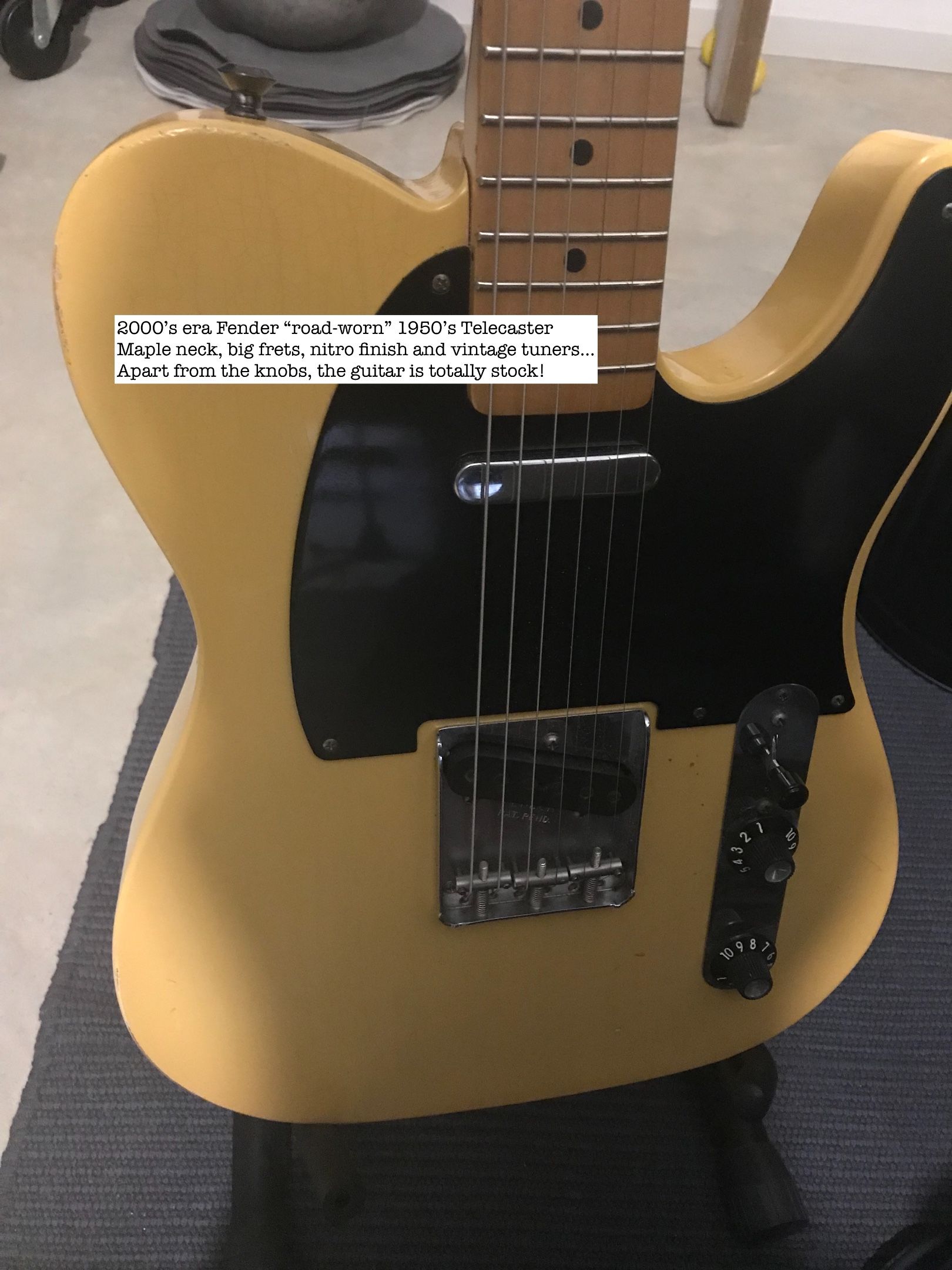
The first sample uses a 1950’s “road-worn” Fender Telecaster with stock pickups and electronics. It’s a 2000’s era model with 10 gauge strings and standard EADGBe tuning.
For this sample, there are six tracks, as follows:
Position 1 [jazz] using the neck pickup
Position 1 [jazz] using the neck pickup
Position 2 [scoop] using both pickups
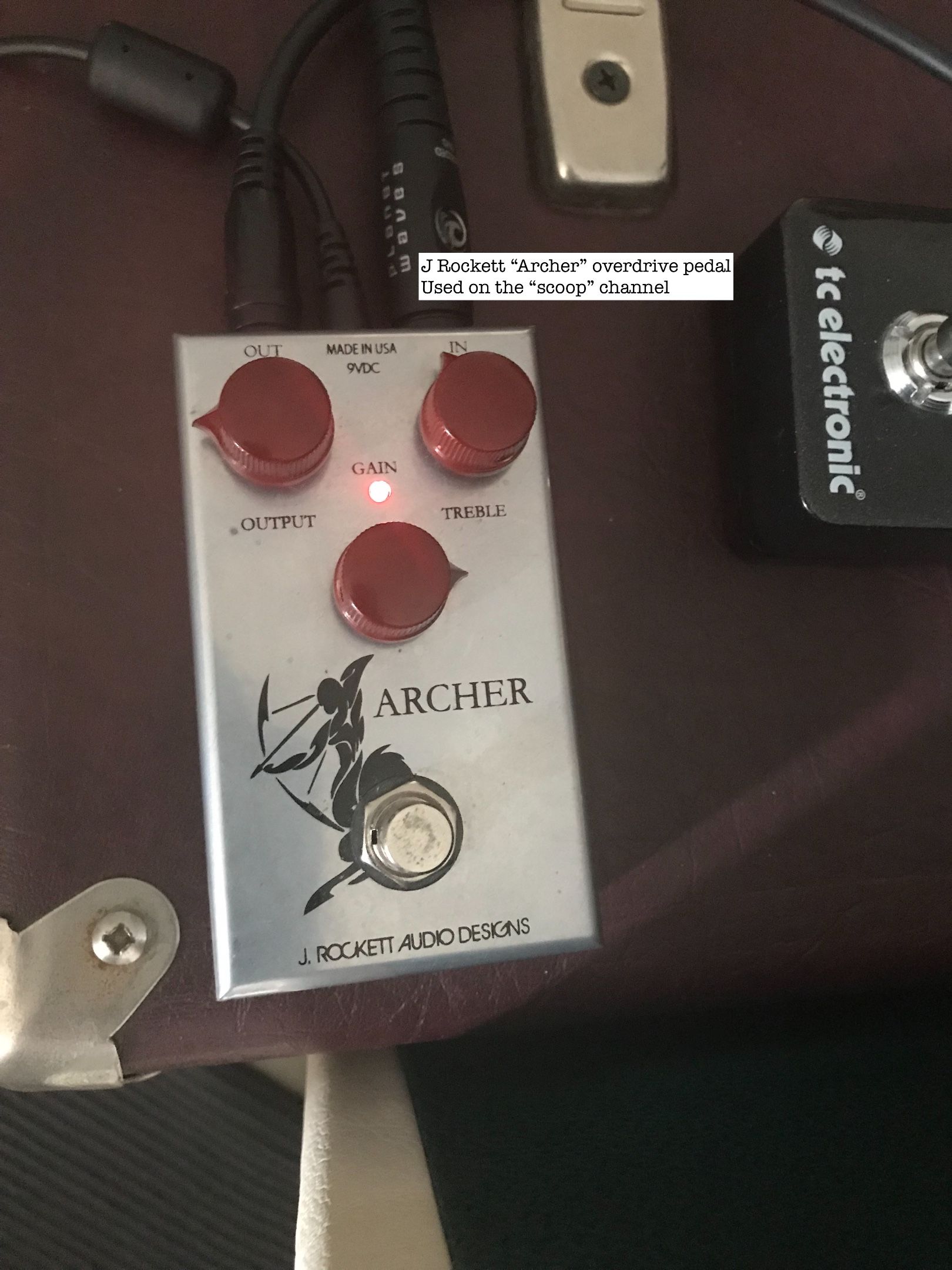
Position 2 [scoop] using the bridge pickup and a Rockett “Archer” overdrive pedal
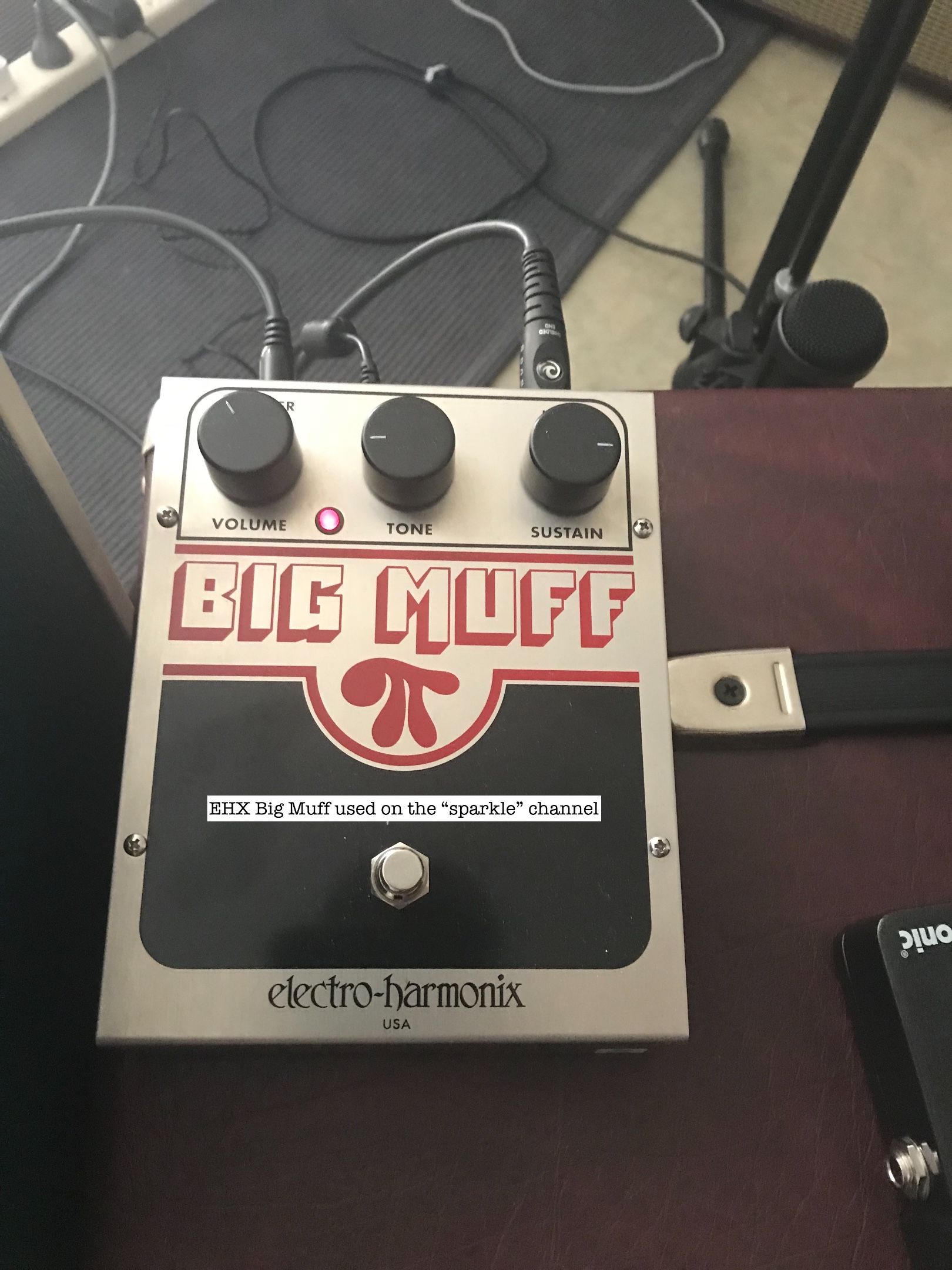
Position 4 [sparkle] using the bridge pickup and an EHX “Big Muff” fuzz
Position 4 [sparkle] using both pickups and AVID “Orange Phaser” plugin effect
In addition, there is an AUX effect using a Sound Toys “Little Plate” reverb plugin.
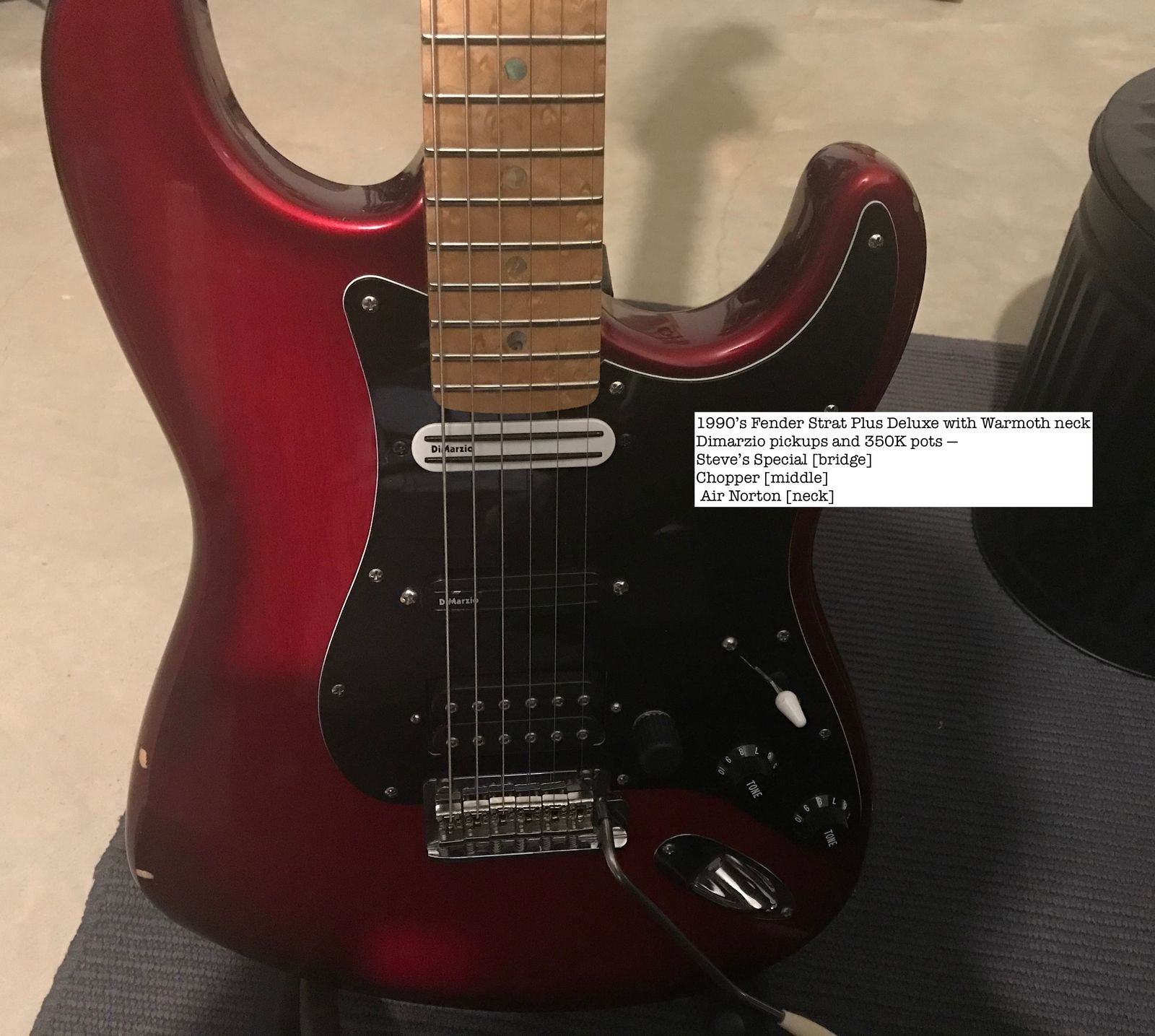
The second sample uses a heavily customised 1990’s Fender Stratocaster Plus Deluxe. It features a Warmoth neck, Dimarzio pickups and 350K pots. It has 10 gauge strings and for this sample, is tuned to drop D.
For this sample, there are six tracks, as follows:
Drum loop
Bass
Position 2 [scoop] using middle pickup and a Rockett “Archer” overdrive pedal
Position 2 [scoop] using the bridge pickup and a Rockett “Archer” overdrive pedal
Position 4 [sparkle] using bridge pickup and an EHX “Big Muff” fuzz
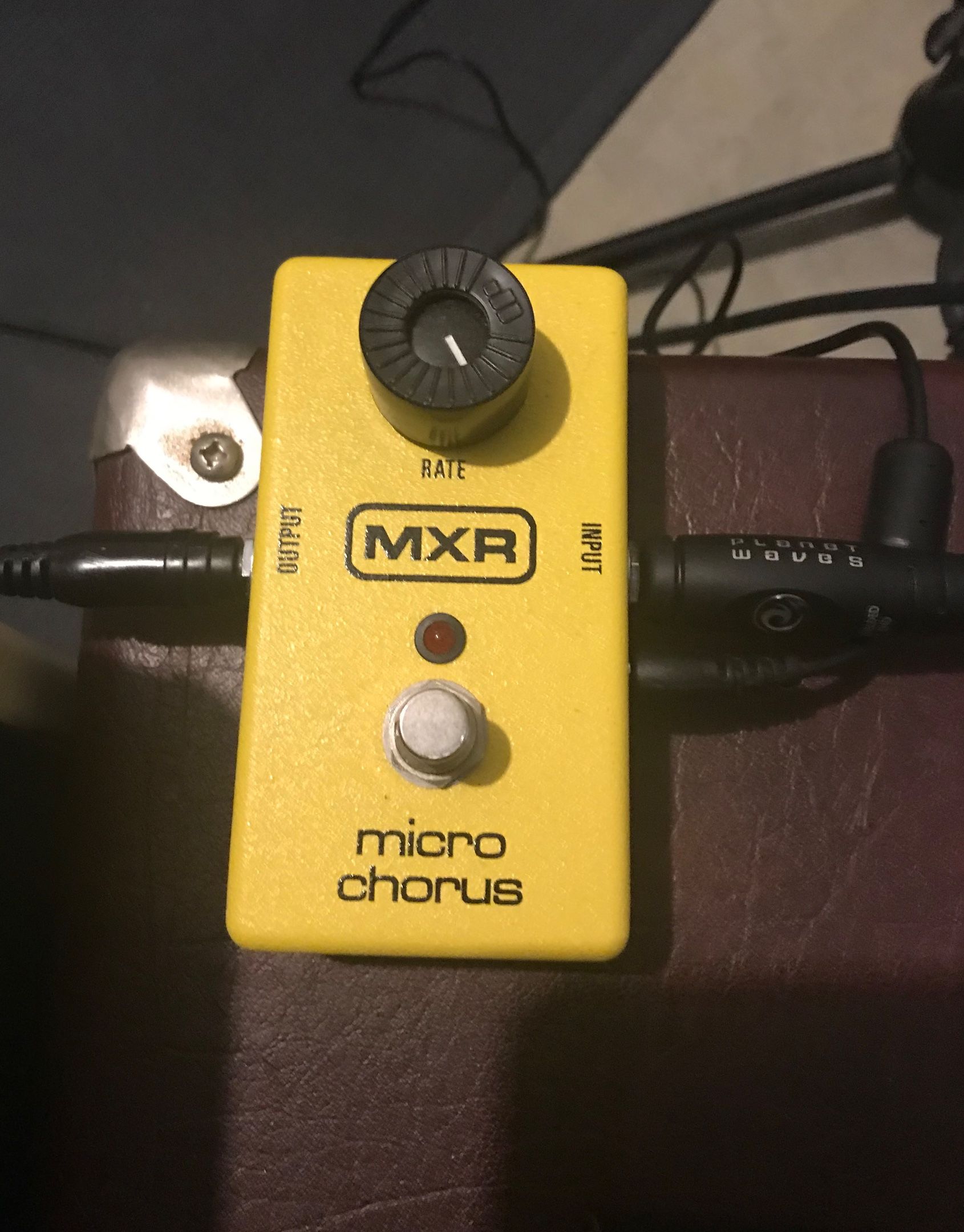
Position 4 [sparkle] using bridge pickup and an MXR micro chorus
Settings for the Big Muff and Archer were slightly different for this track. There was also an MXR micro chorus pedal with the rate control set flat out.
As with the previous sample, there is an AUX effect using a Sound Toys “Little Plate” reverb plugin.
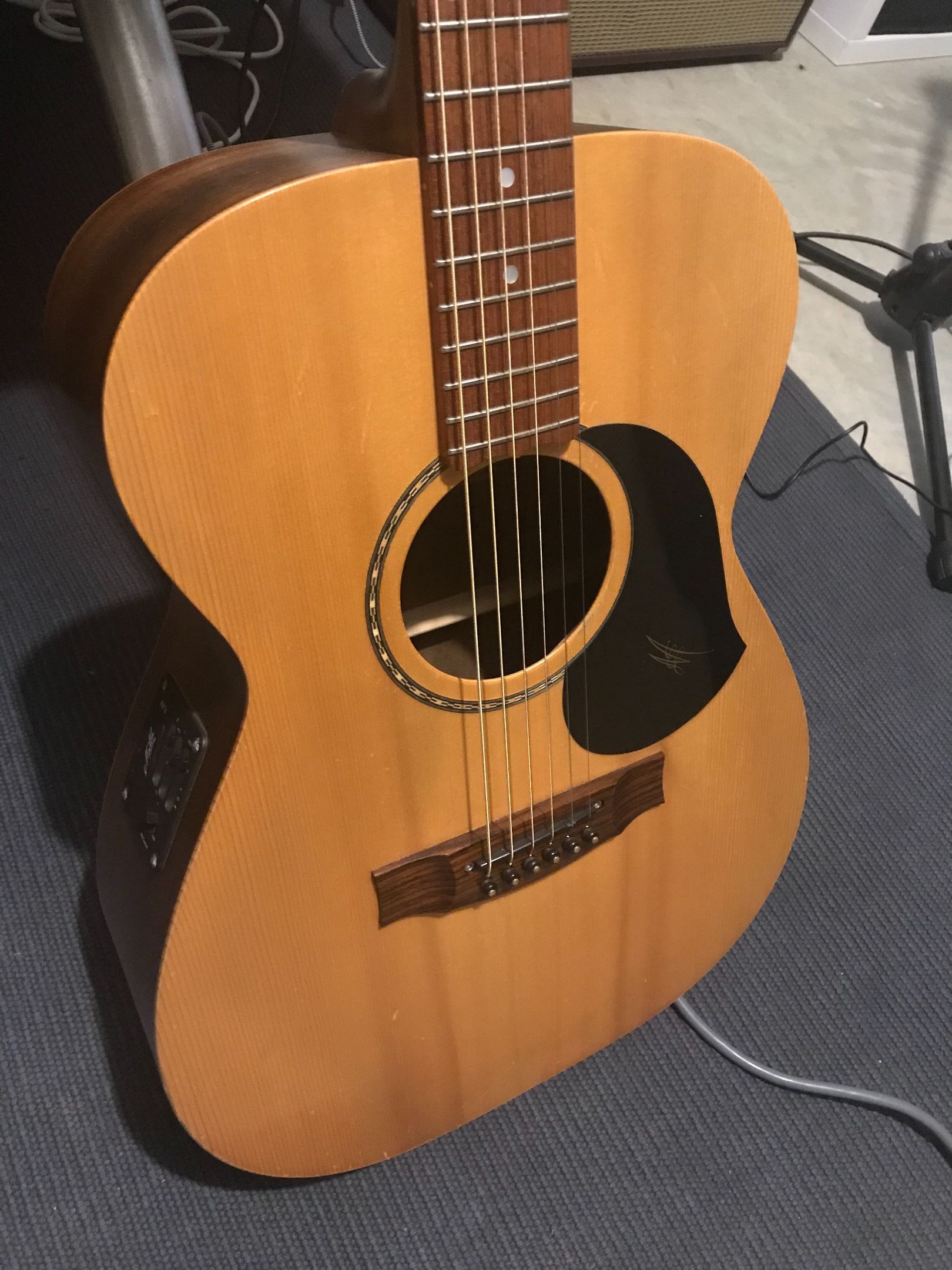
The third sample uses the flat EQ setting with a Maton EM808 acoustic guitar. The guitar uses 13 gauge strings and is tuned to “Drop C#” for this piece. It has the AP4 piezo pickup system and ebony bridge saddles.
For this sample, there are two tracks, as follows:
Position 3 [flat] with Maton EM808 acoustic guitar
Position 3 [flat] with Maton EM808 acoustic guitar
As with the previous sample, there is an AUX effect using a Sound Toys “Little Plate” reverb plugin.
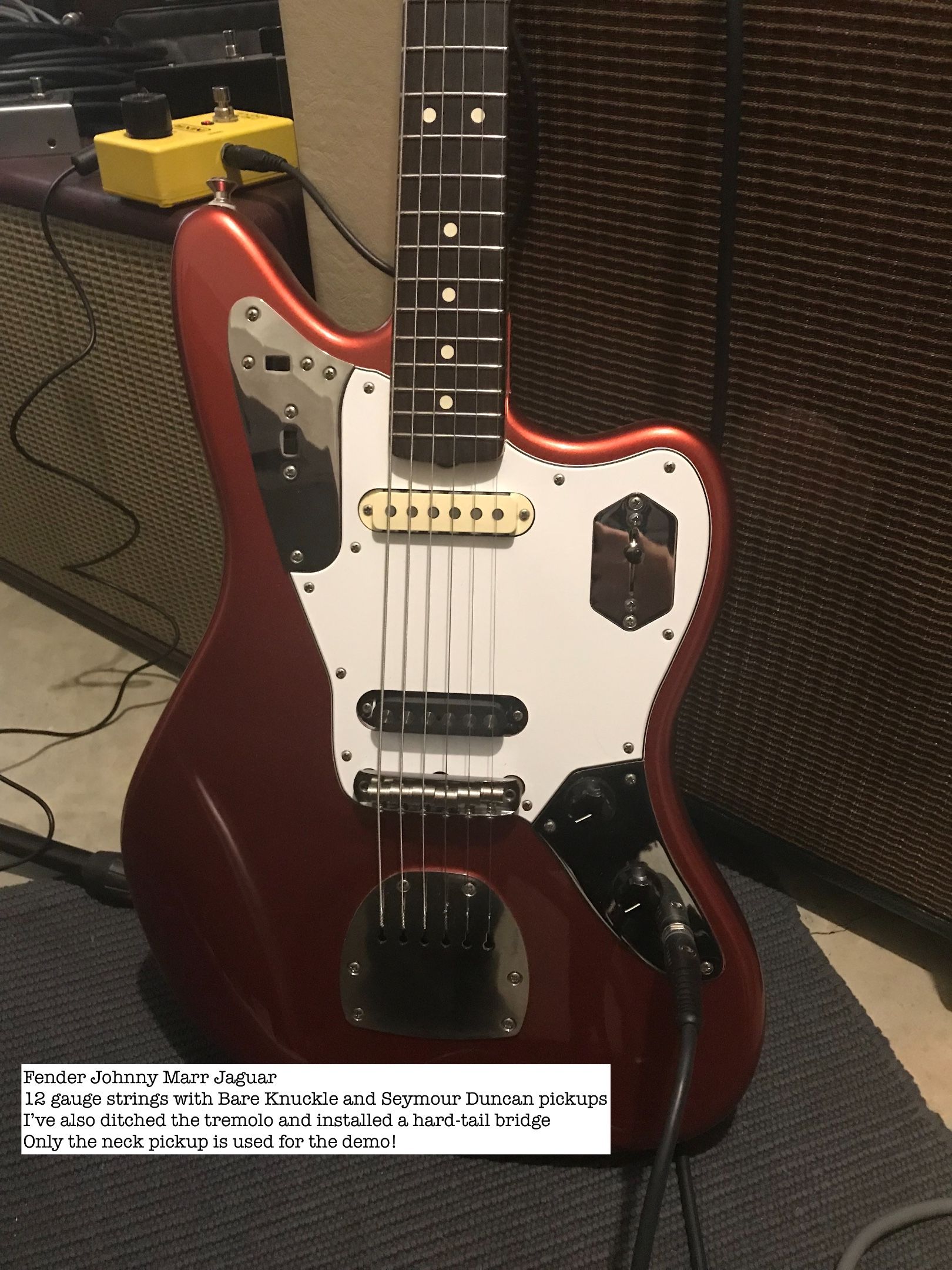
The final sample uses the jazz setting with a Fender Johnny Marr signature Jaguar. The guitar is tuned to E standard, uses 12 gauge strings and has an aftermarket hard-tail bridge. It’s got Bare Knuckle (neck) and Seymour Duncan (bridge) pickups however for the sample, only the neck pickup is used.
For this sample, there is one track, as follows:
Position 1 [jazz] using neck pickup
As with all previous samples, there is an AUX reverb effect using a Sound Toys “Little Plate” plugin. In addition, I’ve used the EQ-3 plugin to notch out the ambient sound of the amplifier. With just a single guitar by itself, this was a little distracting.
Conclusions
I’ve been playing guitar for a long time and I’ve never come across an EQ control that offers the level of simplicity and flexibility this custom Baxandall circuit does. Each preset seemingly reconfigures the response and nuance of the amp. And yet, different guitars still sound like “different guitars.” Pedals work exceptionally well and even though I didn’t utilise the master bass or treble controls for the recorded samples, these can obviously be used to further fine tune your sound according to the guitar or the acoustic space.
As you can hear in sample 4 above, the jazz preset really did make me want to play jazz and importantly, it worked best on a guitar setup for that style. Ditto for the scoop preset in that the amp responds like a typical all-tube Fender — it takes pedals like nothing else and when you dig in, the amp responds in turn.
When I recorded sample 3 I really wasn’t expecting the result I got. I was amazed at the acoustic tones coming from a closed back Vintage 30. That’s literally (wait for it…) unheard of. I also happen to think that preset 3 would work exceptionally well with amp modellers such as the Line 6 Helix or a Kemper Profiler. However at this stage, I don’t own anything of that nature and therefore, can’t effectively test these claims.
If you like what you hear, I encourage you to get in touch with Andrew Neale and discuss a build.